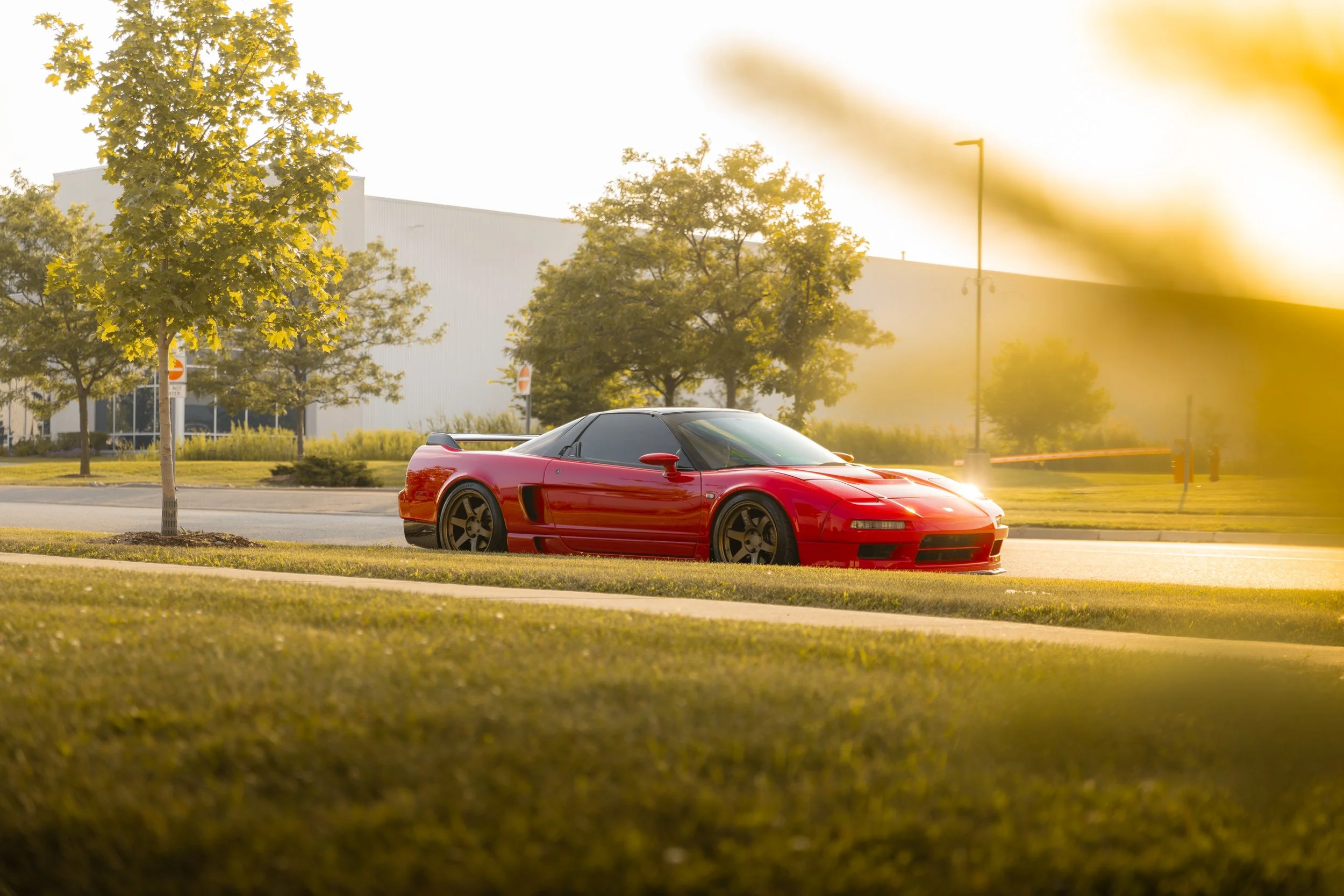
The NSX, As a Companion
I never had an NSX on my wall growing up.
My fascination with cars started somewhere else. Lamborghinis. Ferraris. The cars that looked so cool you couldn’t take your eyes off them.
There’s this story I tell a lot because it’s still vivid.
I was six or seven when my dad asked my brother and me what we wanted for Christmas. I said a Spider-Man action figure. My brother asked for a 1:18 scale model car.
Christmas morning comes and he opens up a 1:18 Burago Dodge Viper SRT-8 convertible. Like most little brothers, I forgot about Spider-Man immediately. I couldn’t keep my hands off the car, opening the doors, popping the trunk, just staring at it. Something about it grabbed me in a way I didn’t have words for yet.
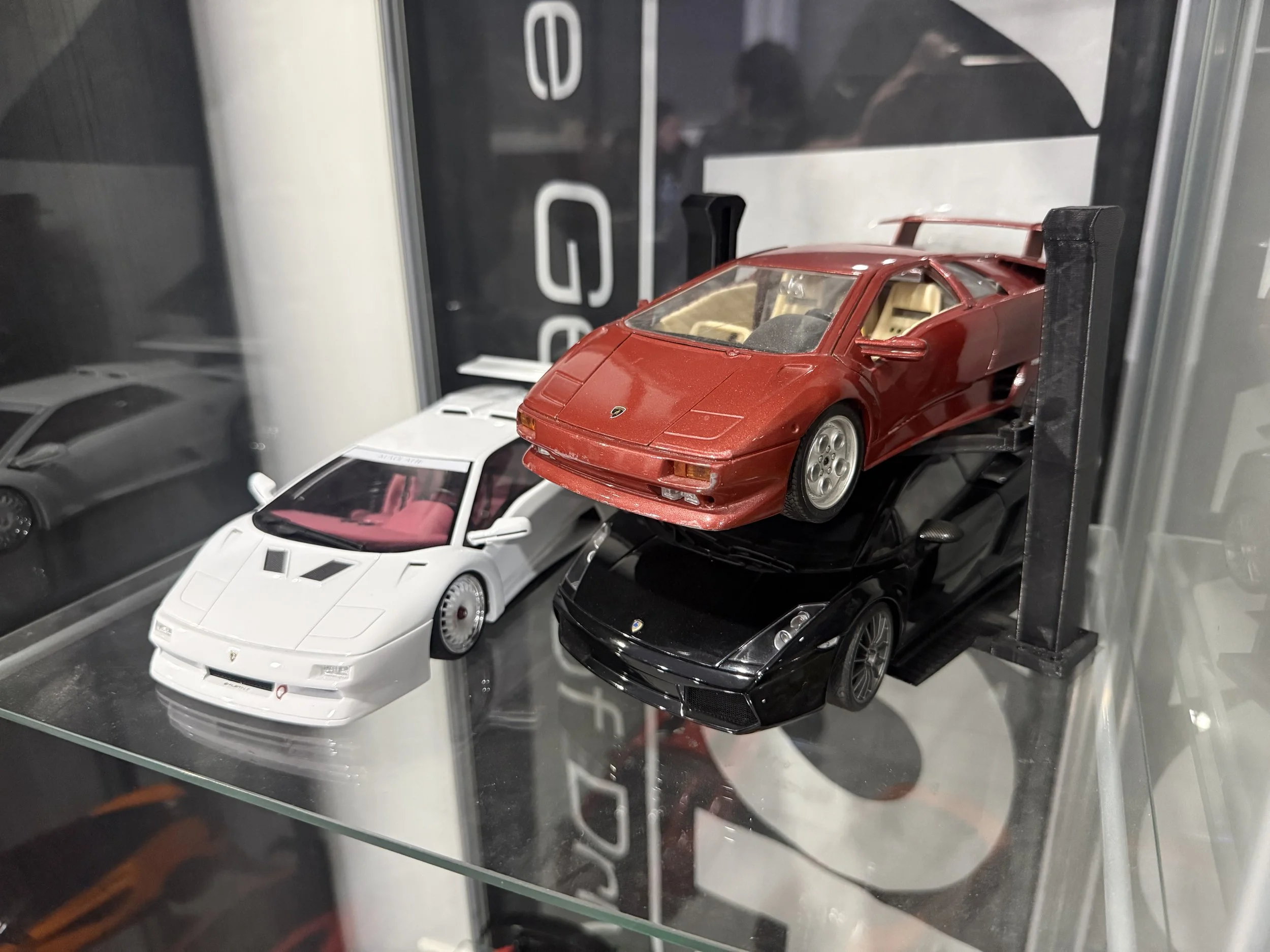
I begged my dad to return the Spider-Man toy. We went to the hobby store at Duffin Mall, and that’s when I picked the one that stayed with me: a 1:18 Lamborghini Diablo, burgundy red with an ivory interior.
Funny enough, that Diablo still sits in our collection at Kodawari Collective, and our NSX has an ivory interior too. It feels like one of those quiet full-circle details you only notice years later when you slow down enough to see the pattern.
The collection grew from there, and even though I didn’t realize it at the time, that sensitivity to shape, proportion, and design was quietly shaping how I would see cars for the rest of my life.
So the NSX wasn’t a poster car. It wasn’t a childhood dream.
But the taste for it was already forming long before I knew its name.
The first encounter
My first real encounter with the exact red NSX we now have didn’t happen in a dealership or at a show. It belonged to my friend Chris Hoare.
At the time, my friend Tom was building out Nextmod Mississauga near Dundas and Cawthra, and I was deep into building my CSX Type S. I had just started playing with a small Mugen-inspired livery down the side, something subtle that felt like my own interpretation, and I was proud of it in a way that only comes from building something yourself.
One day Tom called me and said, “Hey, one of our clients came by. He saw your car. He loved it. He was asking who owned it.”
That client was Chris.
Tom introduced us and it felt effortless from the start. Same appreciation for quality. Same obsession with small details most people would never notice. Conversations that didn’t feel forced because we were speaking the same language.
Chris was a graphic designer. Dirty Nails Bloody Knuckles, later Get No Where Fast. Over time I bought posters from him, and his work slowly became part of our world. Modern Classics on the wall. RX7. GT2 RS. His taste lived in our space.
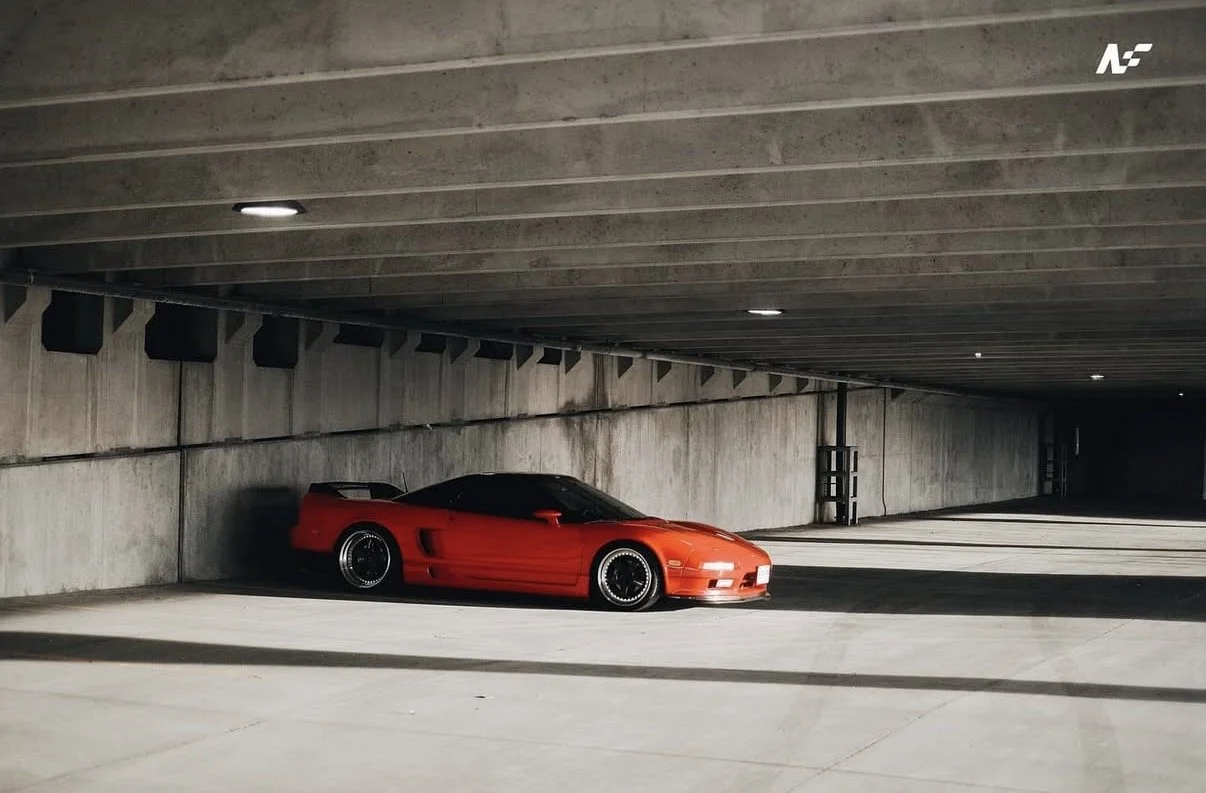
And every time I saw him, I saw the NSX.
Red. Tasteful. Aggressive in all the right ways. Work Meister S1s sitting just right. A build that felt intentional without trying too hard, like someone understood the restraint required to protect a timeless silhouette.
But here’s what’s interesting.
Even after seeing his car, even after being around a few NSXs back then, I wasn’t chasing one. It entered my world, but it didn’t feel like something that was within reach, and maybe I didn’t feel within reach of it either.
Back then, the ceiling of my car dreams felt more like an S2000. That felt realistic. The NSX felt like a different future, one that belonged to a more established version of myself.
So that was my first encounter. Admiration from a distance, tied to a friendship that would later mean more than I understood at the time.
Roots before the halo
Before the NSX, there was Honda.
My cousin was the first one driving in our group. He was like a big brother to me, and I remember watching him cycle through a few Civics before landing on a clean white 97 coupe with a B16B in it. A Civic Type R motor. Something about that engine note, the way it climbed, changed how I thought about what a small car could feel like.
I remember him ripping through the gears one day and saying, “I can’t wait for you to feel VTEC.” At the time I laughed it off. I didn’t even have my license yet. I was gaming, still figuring myself out, and cars weren’t real in my world yet. They were just something older guys did.
Then life shifts in quiet ways. You start needing transportation. You start wanting independence. That same Civic eventually ended up in my brother’s hands. I lent him the money to buy it, he drove it hard, eventually crashed it, and then moved west. The motor survived. The shell didn’t.
If I’m honest, that’s a funny theme in my life. Little brother energy. Wanting what the big brother had, helping him get it, and somehow it circles back to me anyway.
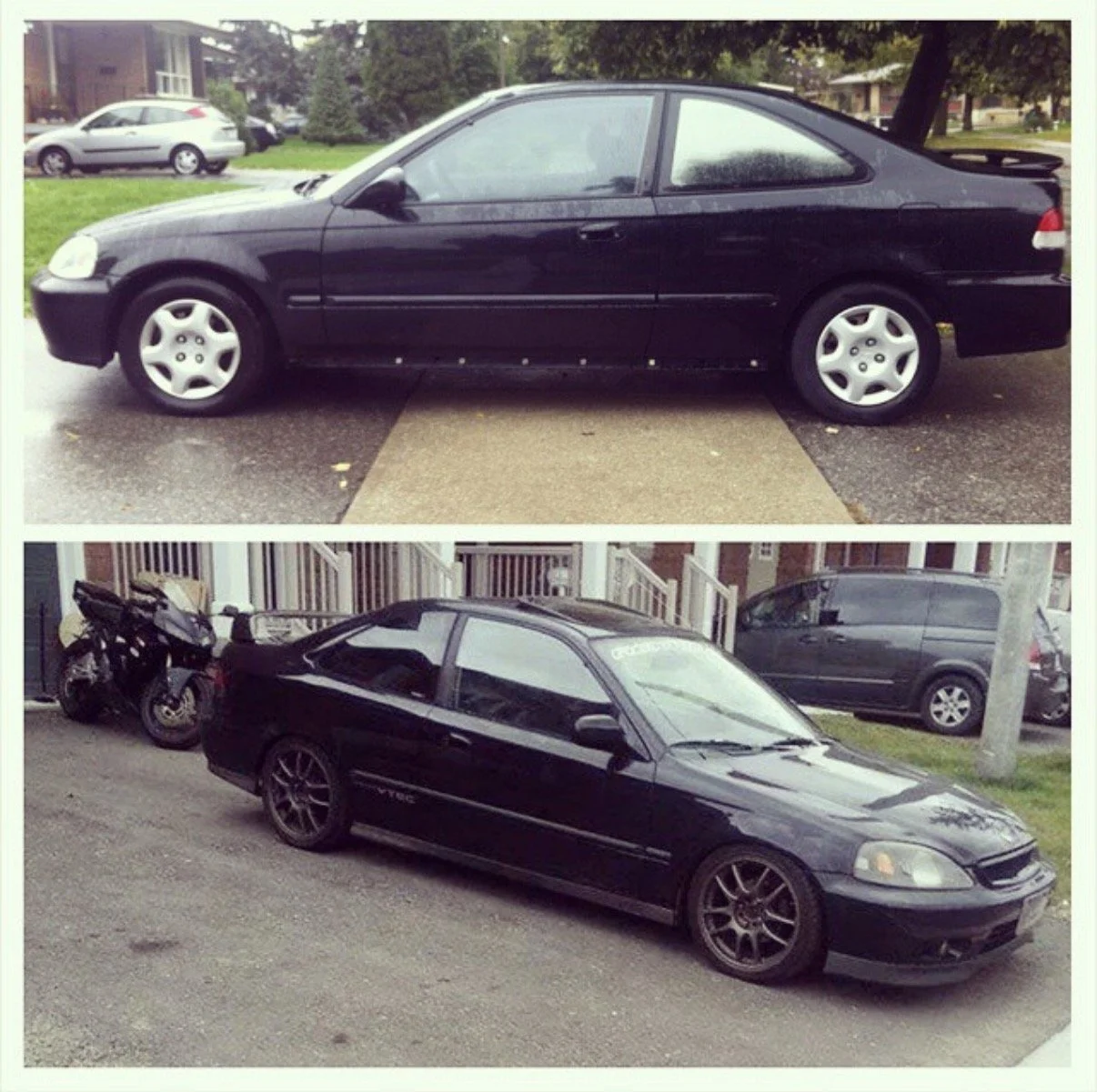
So I found a 99 Si shell with a D-series for about two grand, and with help from Billy at Tires 23 we transplanted the B16B into it. That was the real beginning.
The car started off simple, but that motor changed everything. Revving a 1.6L to 9,000 RPM all day long was intoxicating, and it was the first time I truly understood how an engine could completely transform the experience of driving. From there I began personalizing it slowly, listening to Billy when he told me to focus on quality instead of chasing whatever was trending.
Recaro DC2 seats. 17-inch Work CR Kais. HSD coilovers.
As the car evolved, I started noticing details I couldn’t fully articulate yet. Concavity. Fitment. The way a car sits. How a lip kit visually lowers the entire profile and shifts the energy of the car without touching the motor. I didn’t know I was developing a design language. I just knew I cared deeply about how it felt to look at.
Over time, something else was happening beneath the surface. The EM1 came from an era just before mine, and while I loved it, I was growing up, earning more, and wanting something that felt current and closer to the generation I was stepping into. I wanted newer tech. A platform that represented where I was in life instead of where Honda had been in the 90s.
And if I’m being completely honest, I was still in that phase of chasing the next thing. What’s newer. What’s better. What’s next. Even when you already have something special, it’s easy to believe the upgrade will unlock a bigger version of yourself.
That mindset is what led me into a 2008 Acura CSX Type-S. The seed was planted when Billy showed me a Honda Tuning cover of an FD2-style build and said, “This is the Civic you want.” I remember staring at it and thinking, yeah, that feels like the next chapter.
That era became about chasing Type R parts from Japan, idolizing what we didn’t get here, saving up and slowly building our own versions of the cars we admired from across the ocean. Looking back now, that process mirrors life more than I realized at the time.
We all start as base models. With enough mistakes, enough effort, enough time, we slowly build ourselves into the special editions we once admired.
The CSX already carried a Type R theme when I bought it, and when I discovered the Mugen RR, that became the direction. My version of it. That chapter is where I got deep into the lifestyle. Late nights at Nextmod Mississsauga. Parking lot meets. Road trips to events. Living inside that world with friends who felt like family.
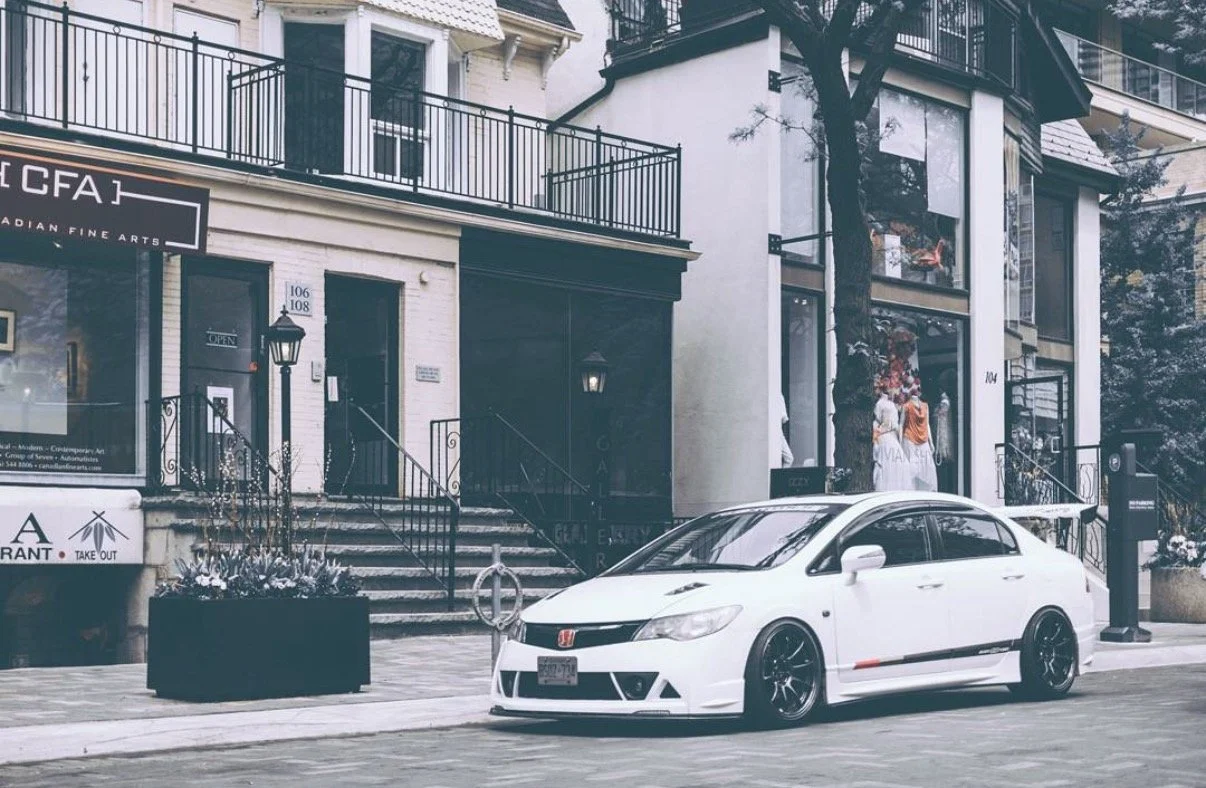
I learned what I loved. Working on the car with people I cared about. Saving up for the right parts. The quiet satisfaction of refining something over time instead of rushing it.
And I learned what didn’t resonate.
Going to shows like Importfest with friends was fun and the community was real, but watching people get overly fixated on plastic trophies never sat right with me. Recognition is cool, but when it becomes the entire reason, the joy starts to fade. So I stepped back from chasing the show scene and leaned more into building for myself and enjoying the car with people who cared about the experience.
Eventually I got into an accident with the CSX. I was considering a first-gen FRS as a replacement, but then Honda announced the FK8 Type R was finally coming to North America. They unveiled it at Geneva on my birthday, and it felt like one of those strange alignment moments that makes you pause.
I bought a black 2017 FK8 Type R from Family Honda. My first brand new car. My first real Type R. I remember watching a YouTube interview where the engineer said they wanted to build a Type R the driver would fall in love with and want to drive forever, and something about that line stayed with me.
Every time I got into that car I felt this balance of quality, excitement, and usability. I still tell the story of the day I picked up a 36-inch vanity from Ikea, slid it into the hatch, and drove home grinning the whole time. Playful and practical in the same breath. I felt grateful every time I turned the key.
Through each of these cars, something consistent was forming.
Creativity. Community. A connection to fun in everyday life.
Long before the NSX ever entered the picture, Honda had already shaped how I thought about driving, modifying, and sharing cars.
The halo didn’t come first.
The roots did.
Why A Halo Exists
As I thought about the kind of shop I wanted to build, I kept studying the tuning culture in Japan. The shops I admired each had a car that carried their philosophy in a way that felt unmistakable.
I knew we needed a halo car, something that could represent what we believed in without needing a long explanation. Something mid-engine. Something that would stretch me beyond the front-wheel-drive world I had lived in for so long.
There was a Berlina Black NSX in our friend circle owned by Ray’s brother. He won an Infiniti SUV in a casino giveaway, traded it for a Jetta and the NSX, and then let it sit for years while life happened.
We always joked about me buying it, but as shop renovations were wrapping up and everything felt like it was reaching a turning point, I asked to borrow it for a photoshoot with my FK8.
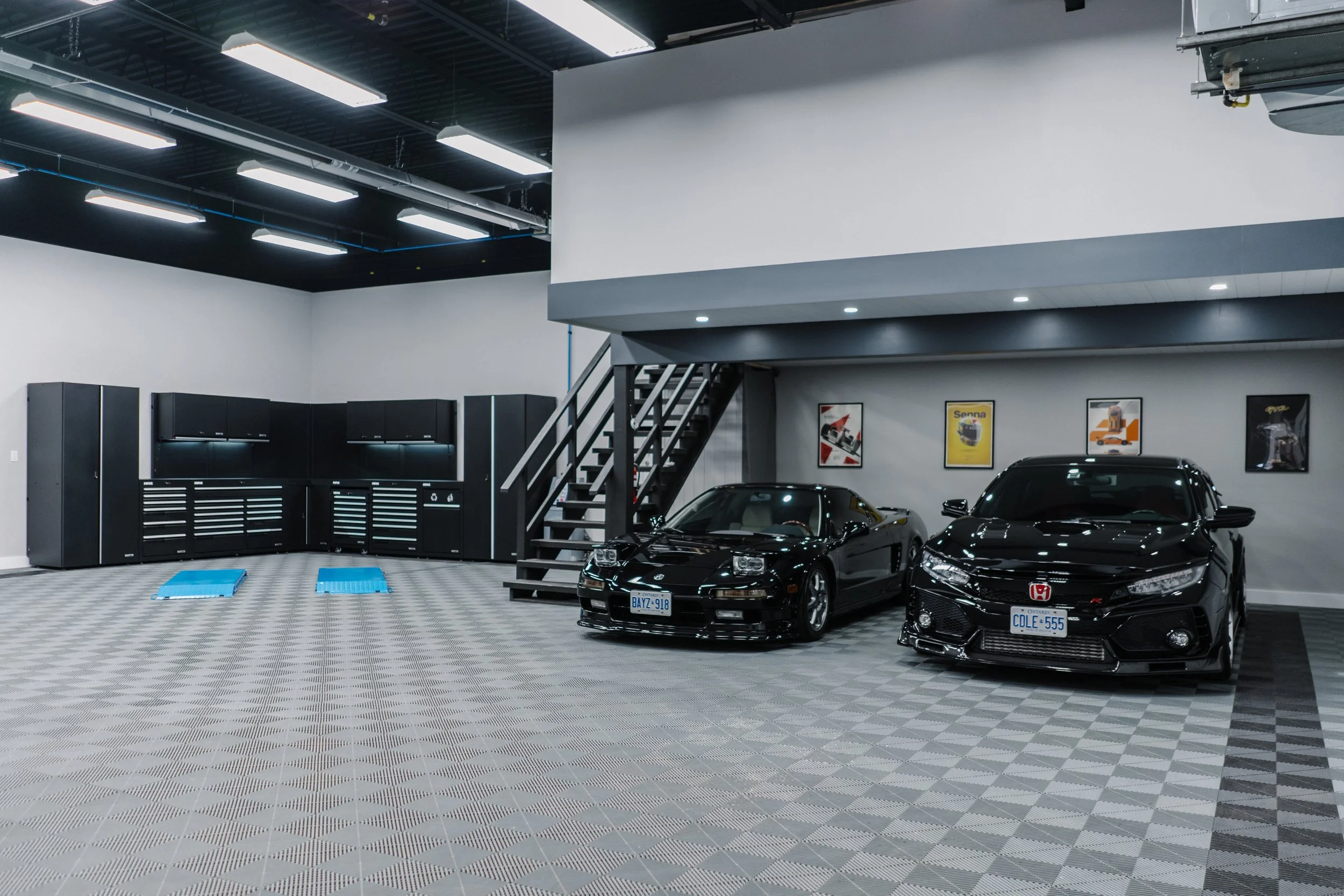
He asked, “Are you still down to buy it?”
I said yes without hesitation.
He needed two weeks to think about it, and in those two weeks I got so excited I bought wheels for a car I didn’t even own yet. Double-staggered TE37s. Real concave front and rear. I was already building the vision before the paperwork was signed.
Two weeks later, he told me he couldn’t let it go. It was his dream car.
It hurt, but it clarified something.
I wasn’t casually interested anymore.
I needed one.
So I asked myself, who do I know that actually owns and drives an NSX the way I would want to.
Chris Hoare’s name came up immediately.
I reached out at first just to ask about ownership and what it was really like to live with an NSX long term. He said, “It’s a Honda. Oil changes. Timing belt. Water pump. Easy.” Then, almost casually, he added, “I think I may be moving on from mine.”
My jaw dropped. Chris was the last person I expected to sell his NSX.
Two weeks later, the stars aligned.
When he delivered the car to the shop, I didn’t fully grasp the weight of that moment. The red paint pulling into the driveway. A car built with care. From a friend I respected. Into a space that had taken everything I had to build.
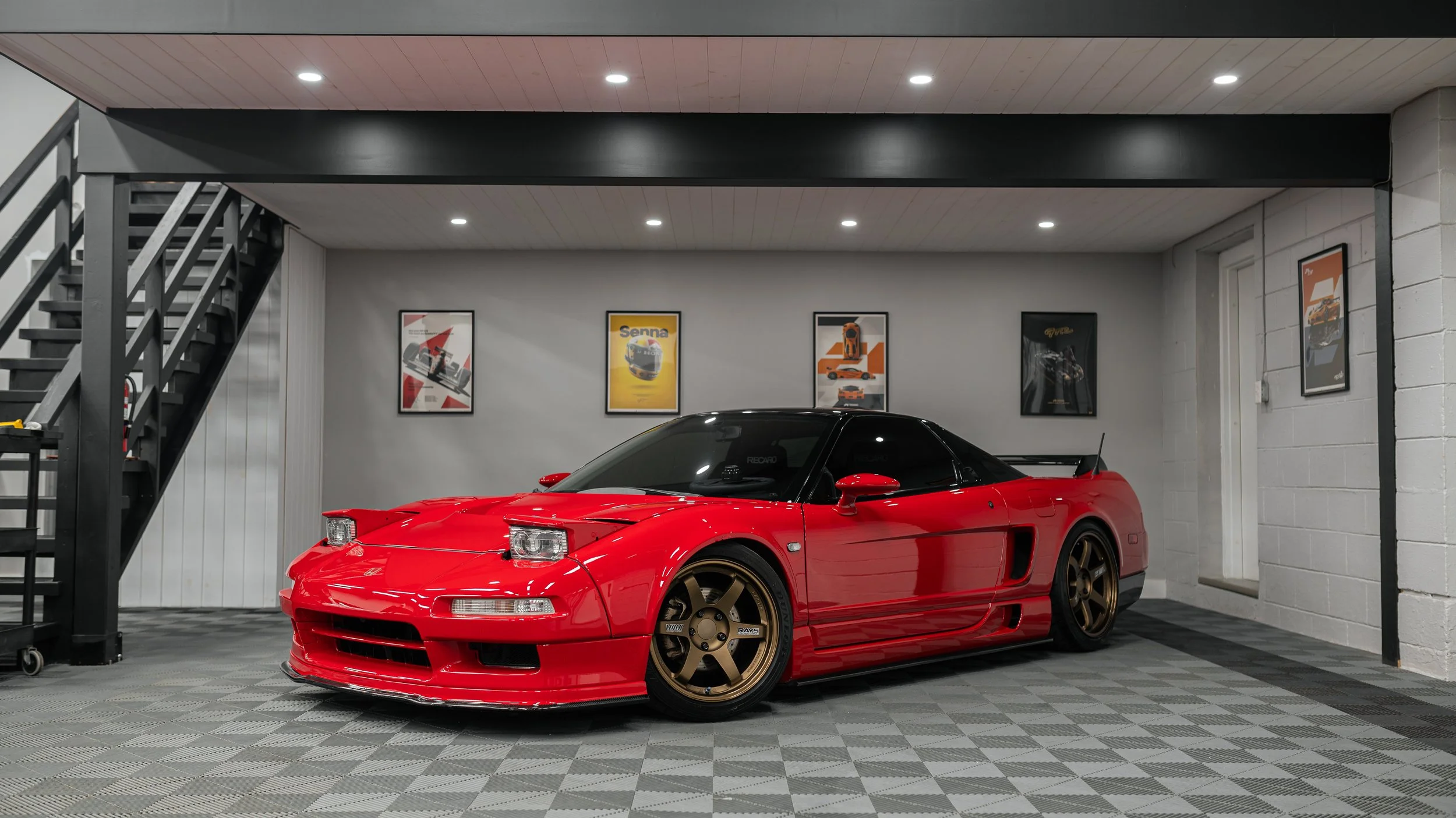
Chris handed me the keys, and on that first drive he said, “It’s hard to explain the effect this car has on people.”
I understand now.
That’s when it shifted from owning a car to sharing an experience.
BUILD PHILOSOPHY
Chris had built the car with so much care that I felt a responsibility not to disrupt its balance. I didn’t want to overdo it, and I definitely didn’t want to repeat my old pattern of doing too much too fast.
Full motor builds always come with tradeoffs. More performance often means more complexity, more stress, and a higher chance of downtime. In a place like Toronto where the driving season is short, every good day behind the wheel feels like a gift. I wanted a car that invited kilometers instead of forcing time in the shop.
Around that time, Gordon Murray was back in the spotlight talking about the T.50 and the philosophy behind his GMA cars resonated deeply with me. Lightweight. Manual. Naturally aspirated. Strip away the excess and focus on the purity of the experience.
The NSX already fit that formula.
So instead of chasing numbers, I chased feel.
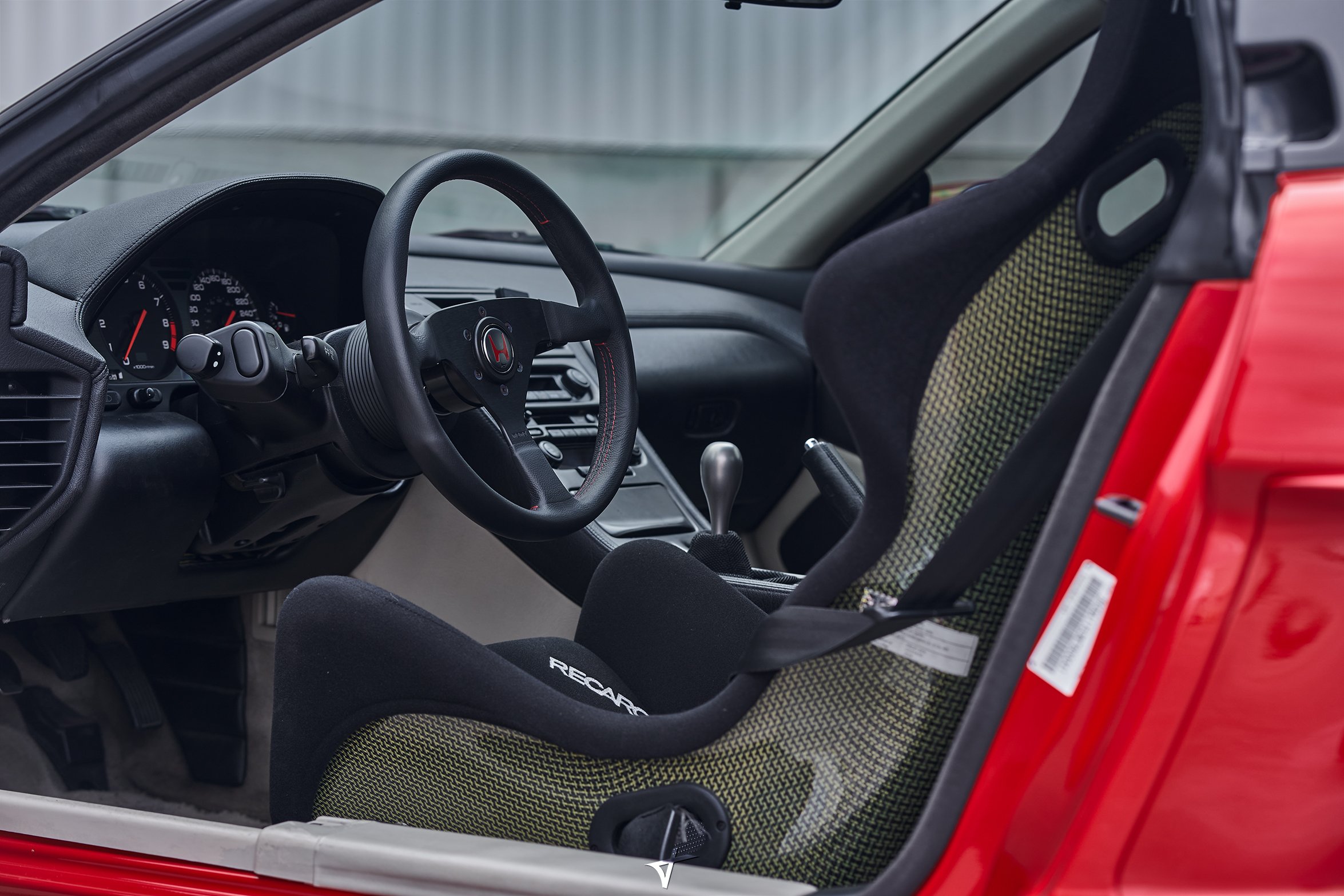
Recaro ASM RS-Gs. Monte Carlo Momo 350mm. KW Clubsports. Type R gears and chassis refinement. And eventually KW’s Hydraulic Lift System, which quietly became one of my favourite modifications of all time.
I love driving low cars. I love stance. But I hated the mental tax of constantly calculating speed bumps and driveway angles, the background stress that steals your attention from the actual joy of driving.
HLS removed that friction, not just physically but mentally. It gave me permission to use the car more freely instead of protecting it from the world.
Then I connected with Christian at ATR in Austria, someone building lightweight NSXs with a racing mindset. His advice was simple and it stayed with me.
“If the motor is good, leave it. Remove weight. Refine the chassis.”
He was right.
As we leaned into that philosophy, the car came alive in a way that felt honest. It became the kind of car where you invent errands just to spend time with it. I had a newborn at home and there were days I would swap cars at the shop and drive to Walmart for diapers just because I wanted those extra minutes behind the wheel.
But it also demanded respect.
It was my first rear-wheel-drive car. My first mid-engine car. The kind of platform that feels confidence inspiring until it suddenly isn’t.
So I slowed down. More seat time. More patience. More skill.
I wasn’t interested in driving it at ten-tenths right away. I was interested in understanding it, in building a relationship that could last decades.
The car as a mirror
Some of the best moments with this car never make it online. They live in conversations and quiet exchanges that don’t fit neatly into captions.
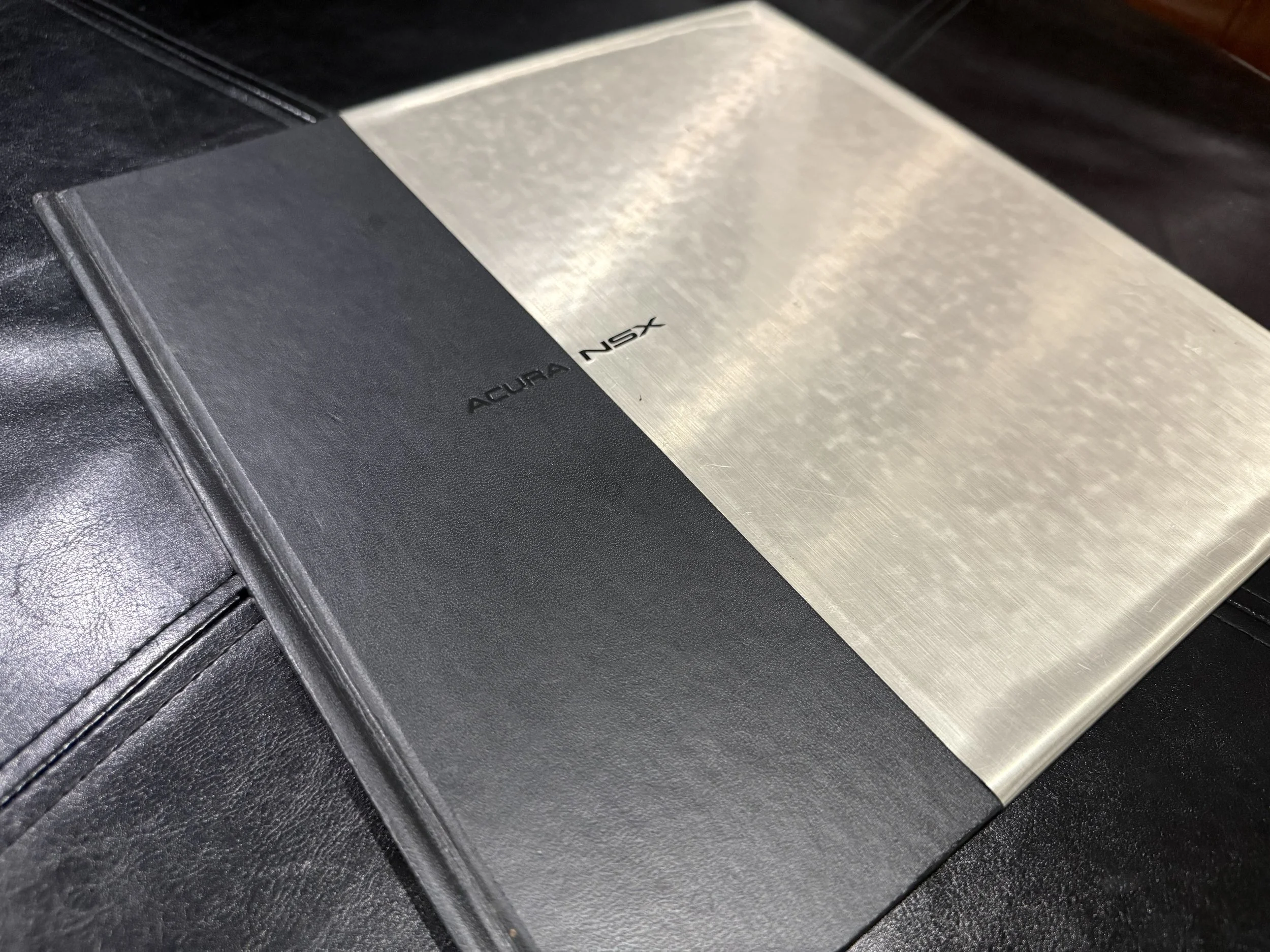
One day a van chased me down and waved me over. The driver got out holding a book and told me he had found an Acura NSX development book in storage. On his way home he saw my car and felt like it belonged with me.
That book now sits in our shop, and every time I flip through it I’m reminded that this isn’t just metal and rubber. It’s teams of people pouring years of thought, engineering, and passion into something they believed in.
Building Kodawari has been one of the hardest things I’ve ever done, and the NSX quietly reminds me that meaningful things are supposed to be difficult. When the hard days come and my head is full of to-do lists, the car has a way of calling me out.
If I’m not present, it tells me immediately.
So it resets me.
It pulls me back into my body. Back into the moment. Back into the craft.
That’s why I don’t think of the NSX as just a car. It feels more like a partner.
The more I drive it, the more I appreciate what Honda accomplished in the early 90s. Visibility. Comfort. Reliability. Usability. A supercar that didn’t punish you for wanting to actually use it.
I’ve put nearly 45,000 km on it in five years. Long road trips. Costco runs. Track days. Early morning drives before the city wakes up. It handles all of it with a kind of excitement that still surprises people the first time they sit in it. Not bad for a 30-year-old car.
Every time I get into it, I’m reminded of the audacity behind its creation. Honda had no business building a car like this, yet they reimagined what a sports car could be in a way that was true to who they were at the time.
It reminds me that you can build things differently. You don’t have to follow the default blueprint if you’re willing to commit to learning more about yourself and having the courage to be different.
That idea has shaped how I build cars, how I build Kodawari, and how I think about building my life.
Why it stays unfinished
I don’t think I’ll ever finish this car, and that realization doesn’t stress me out. It makes me smile.
The shop cars have always been canvases for us to learn on, to refine our taste, to test ideas, and to grow alongside them.
The NSX evolves as I evolve.
Technology changes. My palate changes. My understanding of driving deepens. The car becomes a reflection of those shifts instead of a frozen version of who I used to be.
What matters most isn’t the next modification.
It’s the next drive. The next conversation. The next person who sits in the passenger seat and suddenly understands why we care so much about this world.
The path forward feels simple.
Drive it more. Share it openly. Keep learning. Have fun.
That’s why the NSX is our North Star.
And that’s why it will probably always be an important member of our collective.